
Call us: 021 178 2575
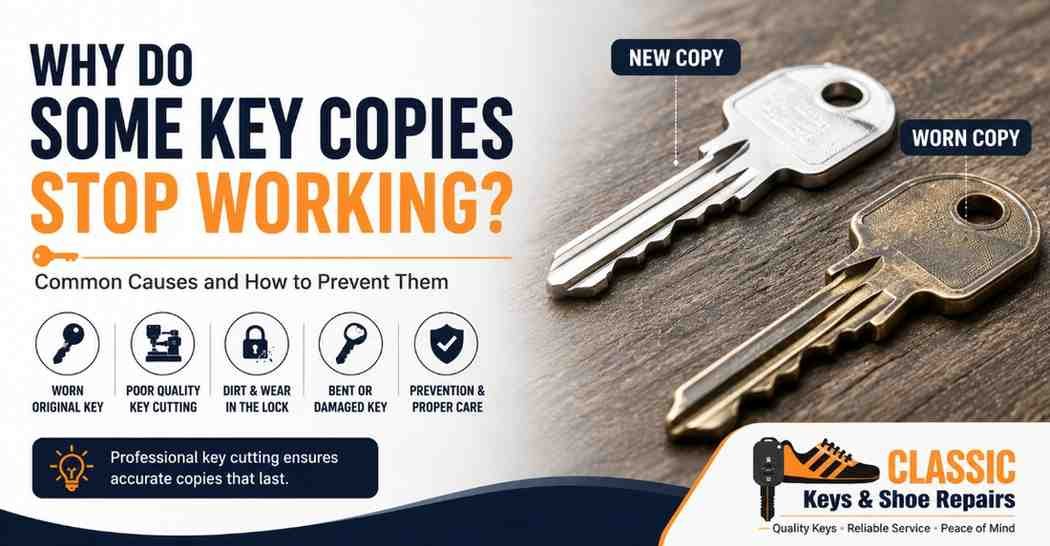

Have you ever had a spare key that worked perfectly at first but gradually became difficult to use? Or perhaps you’ve had a duplicate key that never worked properly from the beginning.
It’s a common problem, and while many people assume the lock is to blame, the issue often lies with the key itself.
From worn originals and poor-quality cutting to damaged locks and everyday wear, several factors can cause a key copy to stop working over time.
In this guide, we’ll explain why some key copies stop working, how to prevent the problem, and when it’s time to have a new key professionally cut.
Why Does a Key Copy Stop Working?
A properly cut duplicate key should operate just like the original.
However, keys and locks experience wear every day. Small inaccuracies can eventually make a key difficult—or impossible—to use.
Fortunately, most issues are preventable with professional key cutting and proper maintenance.
1. The Original Key Was Already Worn
One of the most common reasons duplicate keys fail is that the original key was already worn down.
Every time a key is inserted into a lock, tiny amounts of metal wear away.
If a duplicate is made from a heavily worn key, the cutting machine simply copies the wear instead of the original design.
The result is:
- A less accurate duplicate
- Difficulty turning the lock
- Faster wear on both the key and lock
Tip: If you have multiple keys, always copy the newest or least-worn key.
2. Poor Quality Key Cutting
Not all key cutting services use the same equipment or quality standards.
A poorly cut key may have:
- Incorrect depth
- Slightly uneven grooves
- Rough edges
- Poor alignment
These small differences may seem insignificant, but modern locks rely on precise cuts to operate smoothly.
Professional key cutting equipment produces far more accurate duplicates than worn or poorly maintained machines.
3. Cheap Key Blanks
The quality of the metal blank also matters.
Low-quality blanks may:
- Wear out faster
- Bend more easily
- Lose their shape
- Break under pressure
Using high-quality key blanks helps ensure a longer-lasting and more reliable duplicate.
4. The Lock Is Worn
Sometimes the duplicate key isn’t the problem at all.
Older locks naturally wear over time.
Common signs include:
- Keys sticking
- Difficulty turning
- Needing to jiggle the key
- Inconsistent operation
If both the original and duplicate keys become difficult to use, the lock itself may require inspection or replacement.
5. Dirt and Debris Inside the Lock
Dust, dirt, and moisture can build up inside locks over time.
This may cause:
- Keys sticking
- Rough turning
- Increased resistance
- Premature wear
Regular maintenance can help keep locks operating smoothly.
6. Bent Keys
Keys often become bent after being:
- Sat on
- Forced into locks
- Used to open packages
- Carried loosely in pockets
Even a slight bend can prevent the key from aligning correctly with the lock mechanism.
If your key appears bent, avoid forcing it into the lock, as this can cause further damage.
7. Damage from Everyday Use
Keys experience constant friction.
Over time they may develop:
- Rounded teeth
- Worn grooves
- Small cracks
- Weak points
Eventually, the key may stop operating smoothly or even snap inside the lock.
8. Incorrect Key Blank
Different locks require different key profiles.
Using the wrong blank can result in a duplicate that:
- Fits loosely
- Doesn’t insert fully
- Won’t turn correctly
Professional key cutters carefully match the original key with the correct blank before cutting.
How to Make Your Spare Keys Last Longer
A few simple habits can significantly extend the life of your keys.
- Use the Correct Key: Avoid forcing a similar-looking key into the wrong lock.
- Keep Keys Clean: Remove dirt and debris that can wear both the key and lock.
- Avoid Excessive Force: If a key doesn’t turn easily, investigate the problem instead of forcing it.
Don’t Use Keys as Tools
Keys aren’t designed to:
- Open boxes
- Tighten screws
- Pry objects
- Scrape surfaces
Using them this way weakens the metal.
Replace Worn Keys Early: If your key shows signs of wear, have a fresh duplicate made before it becomes unusable.
How Do You Know It’s Time for a New Key?
You should consider replacing your key if:
- It sticks regularly
- It only works after several attempts
- It feels rough inside the lock
- It’s visibly bent
- The teeth appear worn
- Small cracks are visible
Replacing the key early is much easier than dealing with a broken key inside your lock.
Why Professional Key Cutting Matters
Professional key cutting provides:
- Accurate duplication
- High-quality key blanks
- Smooth operation
- Longer-lasting keys
- Reduced wear on locks
A precisely cut key not only works better but also helps extend the life of your lock.
How Long Does Key Cutting Take?
Many people are surprised by how quickly a professional duplicate can be made. Most standard house, office, and padlock keys can be cut while you wait.
Read more in our guide: How Long Does Key Cutting Take?
How Much Does It Cost to Cut a Spare Key?
Having a fresh duplicate made before your old key wears out is often far more affordable than replacing locks or dealing with emergency lockouts.
Learn more here: How Much Does It Cost to Cut a Spare Key in NZ?
Can Every Key Be Copied?
While many standard keys can be duplicated quickly, some restricted and high-security keys require authorization.
Read our complete guide: Can Any Key Be Copied? Common Questions Answered
Why Choose Classic Keys & Shoe Repairs?
At Classic Keys & Shoe Repairs, we provide professional key cutting services using quality equipment and reliable key blanks.
Our services include:
- House key duplication
- Office key cutting
- Mailbox keys
- Padlock keys
- Gate keys
- Selected security keys
Our goal is to provide accurate, long-lasting key copies that work smoothly every time.
Final Thoughts
Most key copies don’t stop working overnight. Problems usually develop gradually because of worn originals, inaccurate cutting, poor-quality key blanks, or ageing locks.
The good news is that these issues are often easy to avoid. By choosing professional key cutting, using high-quality duplicates, and replacing worn keys before they fail, you can enjoy smooth, reliable access to your home or workplace for years to come.
If your spare key has become difficult to use, visit Classic Keys & Shoe Repairs. We’ll inspect your key, recommend the best solution, and provide accurate, professional key cutting you can rely on.
Frequently Asked Questions
Why does my duplicate key only work sometimes?
This is usually caused by a worn original key, poor cutting accuracy, or a worn lock.
Can a worn key damage my lock?
Yes. Continuing to use a badly worn or bent key can increase wear inside the lock and may eventually cause damage.
Is it better to copy an old key or a spare?
Always copy the newest or least-worn key. This results in a more accurate duplicate.
How often should I replace a frequently used key?
There is no fixed timeframe, but if a key becomes difficult to use, visibly worn, or bent, it’s a good idea to have a new duplicate made.
Can a bad key copy be fixed?
Sometimes a poorly cut key can be recut using the original. If the original is worn, creating a new key from a better-quality source may be the best option.